

TFAS Santiago 2026 convened emerging leaders from more than 20 countries for an intensive exploration of the ideas that sustain free societies. Fifty-four students gathered in Santiago, Chile, to examine liberty, free markets and constitutional government through rigorous academic study and direct engagement with institutions shaping public life in Chile.
Held in partnership with Universidad de los Andes (UANDES), this year’s program emphasized the enduring relevance of American founding principles in a global context. The curriculum marked the 250th anniversary of both the United States and Adam Smith’s “The Wealth of Nations,” inviting students to consider how the principles of liberty, limited government and free enterprise continue to shape prosperity and human flourishing worldwide. Participants also explored Chile’s history, institutions and culture through coursework and educational excursions in Santiago and Valparaíso.
I’m grateful to have been part of TFAS Santiago 2026. The academic experience was truly exceptional, and I am especially grateful to the professors who guided and challenged us throughout the program, whose insights and expertise greatly enriched our discussions and learning.” – Mariana Padilla ’26 from Peru
In the Classroom: A RIGOROUS STUDY OF FREE SOCIETIES
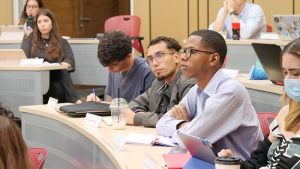
Daily classes at Universidad de los Andes engaged students in intensive study of political economy, constitutional government and Latin American development. Through lectures, discussions and activities, TFAS and UANDES faculty strengthened students’ critical thinking and encouraged them to evaluate the ideas and institutions that preserve freedom and opportunity.

Mariana Padilla ’26, a student from Peru, said the program’s academic rigor and faculty-led discussions played a central role in shaping her experience.
“I’m grateful to have been part of TFAS Santiago 2026,” Padilla said. “The academic experience was truly exceptional, and I am especially grateful to the professors who guided and challenged us throughout the program, whose insights and expertise greatly enriched our discussions and learning.”
This year’s outstanding TFAS and UANDES faculty included:
- Juan Ignacio Brito, professor of communication, UANDES
- Álvaro García-Marín, professor of economics, UANDES
- Pablo Miño, professor of communication, UANDES
- Isidora Puga Serrano, professor of history, UANDES
- Anil Sadarangani, professor of innovation, UANDES
- Nikolai G. Wenzel, professor of economics at Universidad de las Hespérides and TFAS professor of political economy
Longtime TFAS faculty member Nikolai G. Wenzel led core sessions on political economy and constitutional government, guiding students through discussions on the purpose of government, comparative constitutional design and contemporary threats to free societies. For many students, this was their first sustained encounter with the philosophical foundations of American self-government.
A central component of the course examined the Declaration of Independence as an expression of Enlightenment principles, connecting inalienable rights to the constitutional framework that safeguards them. In the context of America 250 and the Wealth of Nations 250, Wenzel emphasized how constitutional structures such as federalism and separation of powers foster the conditions necessary for liberty and economic growth.
“The Declaration of Independence and the Constitution express Enlightenment ideals that remain central to political freedom and economic growth,” Professor Wenzel said.
Morgan Knicely Sturms ’26, a student from Chile, highlighted the value of Professor Wenzel’s guidance.
“[I am grateful to] Professor Nikolai Wenzel for his mentorship in economics and philosophy, which provided a deeper and more rigorous perspective on economic theory,” Sturms said.
Exploring Free Markets and Free Societies

Students extended classroom learning through visits to leading Chilean policy institutions including Libertad y Desarrollo (LyD; Freedom and Development) and Fundación para el Progreso (FPP; Foundation for Progress). Engaging directly with scholars and practitioners, participants examined constitutional reform, economic policy and contemporary governance challenges, gaining insight into how ideas shape real-world outcomes.
As part of the America 250 emphasis, students visited an American Spaces in Santiago, part of the U.S. Department of State’s global network, where they explored the global legacy of American constitutional principles. The program featured remarks from U.S. Embassy spokesperson Chase Guinn and an address from Pontificia Universidad Católica law professor Roberto Villaseca comparing U.S. and Chilean constitutional traditions.

Through comparative discussions, students considered how principles such as limited government, individual liberty and the rule of law continue to shape democratic governance and civil society around the world.
For participants from countries facing political and economic instability, these conversations carried immediate relevance. Students wrestled with how constitutional principles and free-market institutions can support stability, prosperity and responsible leadership in their home countries.
CROSS-CULTURAL CONNECTIONS

Outside of the classroom, students explored Chile’s cultural and historical landscape through guided tours, visits to historic sites and an excursion to Valparaíso. These shared experiences fostered cross-cultural understanding while situating academic discussions within Chile’s historical and civic traditions.
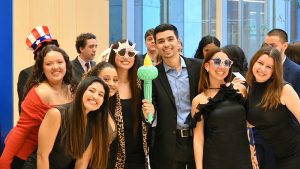
A highlight of the program were the cultural presentations, a TFAS International tradition in which students share their heritage through music, attire, history and cuisine. The cohort also participated in a Chilean Lunch, where students sampled traditional dishes, learned regional dances and took part in local customs, creating an atmosphere of connection, curiosity and celebration.
CONNECTING STUDENTS TO THE TFAS ALUMNI NETWORK
During the program, students also connected with TFAS alumni during a dedicated Student & Alumni Dinner. TFAS alumni from the region joined current participants for roundtable discussions, sharing insights from their professional journeys and offering guidance on career paths, leadership and civic engagement.

The conversations helped students learn from alumni experiences while building lasting connections within the TFAS network, reinforcing TFAS’s emphasis on creating mentorship and community across generations and regions.
TFAS Santiago 2026 reflects TFAS’s mission to prepare principled leaders who understand and can defend the ideas and institutions that sustain free societies. For many participants, the program provides a rare opportunity to engage deeply with the philosophical and institutional foundations of liberty while building relationships that will shape their professional and civic lives.
TFAS is grateful to the faculty, alumni and supporters who make this program possible through their continued investment in TFAS’s mission.
Programs like TFAS Santiago are made possible by the generosity of TFAS supporters who believe in the power of ideas to shape free and responsible societies worldwide. Their investment ensures that the next generation continues to encounter and embrace the principles of liberty, constitutionalism and free enterprise.
View highlights from the program on the reel below or on the @TFASorg Instagram profile.
View this post on Instagram