


In September, The Fund for American Studies (TFAS) hosted the second annual Austrian Economics Seminar in Old Town Alexandria, Virginia. The seminar gathered recent TFAS alumni from around the country for a weekend of debate and conversations about the ideas of the Austrian school of economics and its relevance to current policy debates.

Caroline Gonzalez ’21, ’23 said the program renewed her understanding of economics and gave her an opportunity to discuss its practical applications.
“The Austrian Economics Seminar was just what I needed to jog the intellectual side of my brain,” Gonzalez said. “In the day-to-day mundanity of a career and life where I’m always engaged in economics but hardly thinking about it actively, it’s refreshing to come back to the basics and consider the real-life applications of Austrian economics.”
Economic Theory and Public Policy
Dr. Christopher Coyne, TFAS professor of economic problems and public policies, opened the program with a keynote on Austrian economics. He refreshed participants’ understanding of economics by laying the groundwork for discussions throughout the weekend.

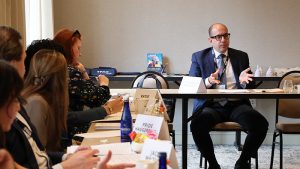
Dr. Anne Bradley, TFAS vice president of academic affairs and George and Sally Mayer Fellow for Economic Education, led alumni in discussion sessions on how modern policies interact with the principles of Austrian economics. She examined how technological change affects economic growth and how decision-making plays into economics on local and global scales.
Bradley brought a variety of economic topics into the conversation, discussing how the ideas of scarcity, trade-offs and incentives impact society.
“Austrian economics helps me think about exports, tariffs, minimum wage or government-run grocery stores,” Bradley said. “The economic way of thinking is the difference between the world we want to have and the world we can have.”
Entrepreneurship and Economic Freedom
Throughout the seminar, participants explored these basic ideas on a deeper level through dynamic sessions with TFAS faculty. Dr. Rosolino Candela, TFAS professor of economies in transition, led discussions that challenged alumni to think critically about free markets and the moral foundations of a free society.
Alumni also examined how entrepreneurship drives innovation and competition. They debated the role of an entrepreneur in a market as a driving force of economic innovation, competition and progress and the relationship between economic and personal freedom.
Adam Lehodey ’22 said the seminar strengthened his critical thinking and understanding of how economics impacts a free society.
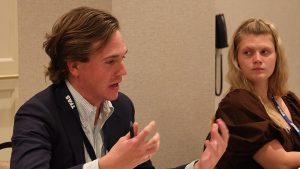
“The seminar was an excellent opportunity to revisit a school of economic thought, grounded in realistic assumptions, that allows us to better understand the world and our goals,” Lehodey said.
Dr. Peter Boettke, distinguished university professor of economics at George Mason University, delivered the closing keynote on the struggle for a better world. He analyzed the ideas, institutions and economic performance that influence the world we live in today and the world these young professionals are inheriting.
Connections Beyond the Classroom
Between sessions, alumni reconnected with friends and met fellow participants from across the country.

Alumni continued conversations from the seminar sessions long after leaving the room. Through engaging insights and unique questions, the group broadened its perspective of economic principles following the guided discussions.
Caleb Davis ’24 said the dynamic seminar sessions allowed for deep conversations with peers.
“The Austrian Economics Seminar challenged me to think more deeply about the role of government and the importance of economic freedom,” Davis said. “I appreciated the opportunity to engage with these ideas alongside people who are passionate about applying sound economic principles to real-world policy challenges.”
Generous support from the Richard Fox Foundation gives TFAS alumni opportunities to continue their economics education and consider how the principles of liberty apply to their work and communities.